Wounded Knee is a narrow creek in north-western South Dakota in the United States. One night in 1890 some 400 Sioux Indians, led by Big Foot, camped in a hollow near the creek. The Sioux were on their way back to the reservation after a "ghost dance" ceremony, farther south in the Badlands.
In the morning the Seventh Cavalry lined up their Hotchkiss guns on the hill and the troopers took up positions round the Indian camp.
The Indians were ordered to hand over their weapons. Suspicious and fearful, they refused. In the subsequent search a shot was fired. At once the machine guns opened up, and in a short time, most of the Indians were dead. Survivors, including women and children, were pursued up the creek and gunned down. Heavy snow began to fall, and the bodies were left to freeze grotesquely where they lay. Several days later the dead were heaped on wagons and thrown into a mass grave.
The Seventh Cavalry were awarded 26 Congressional Medals of Honour for their part in the action. The Battle of Wounded Knee, or more accurately, the Massacre of the Big Foot Band, was the last battle to be fought in America's longest undeclared war.
Showing posts with label people and events. Show all posts
Showing posts with label people and events. Show all posts
Tuesday, August 17, 2010

Sunday, July 18, 2010
Why are some Soldiers called Mercenaries?
Mercenaries are soldiers who give their services, and if necessary, their lives, to anyone who will pay them enough to do so. They were common even in ancient times.
Sometimes they were slaves, as were the Nubians who served the Pharaohs, or freebooters, such as the Philistines who were found in armies throughout the ancient Near East.
In medieval armies, professional soldiers often went to war instead of vassals who owed allegiance to a king or noble. The vassal had to furnish a certain number of armed men to fight in his lord's service for 40 days a year, but an alternative levy of gold was permitted which was used to hire mercenaries.
Mercenaries dominated the turbulent period from the Black Death of the mid-14th Century to the end of the wars of religion three centuries later. The bands which devastated France in the Hundred Years' War (1337-1453) were like those which ruined Germany in the Thirty Years' War (1618-48). The wealthy cities of Renaissance Italy gave them long term contracts for they were tough, skillful men who could cope with any kind of disturbance.
There are still men whose love of adventure and action leads them to enlist with any army who will pay them enough. Many governments, especially those in developing nations, are anxious to pay for their daring and expertise.
Through the ages mercenaries have become heroes, murderers, and the inevitable face of war.
Sometimes they were slaves, as were the Nubians who served the Pharaohs, or freebooters, such as the Philistines who were found in armies throughout the ancient Near East.
In medieval armies, professional soldiers often went to war instead of vassals who owed allegiance to a king or noble. The vassal had to furnish a certain number of armed men to fight in his lord's service for 40 days a year, but an alternative levy of gold was permitted which was used to hire mercenaries.
Mercenaries dominated the turbulent period from the Black Death of the mid-14th Century to the end of the wars of religion three centuries later. The bands which devastated France in the Hundred Years' War (1337-1453) were like those which ruined Germany in the Thirty Years' War (1618-48). The wealthy cities of Renaissance Italy gave them long term contracts for they were tough, skillful men who could cope with any kind of disturbance.
There are still men whose love of adventure and action leads them to enlist with any army who will pay them enough. Many governments, especially those in developing nations, are anxious to pay for their daring and expertise.
Through the ages mercenaries have become heroes, murderers, and the inevitable face of war.
Monday, July 12, 2010
When was Gas first used in War?
Gas was perhaps first used in battle in the Peloponnesian War between Sparta and Athens(431-404 BC) when burning pitch and sulfur were used to produce suffocating gases. But poison gas as a modern weapon was introduced in the First World War on April 22, 1915. The Germans then launched a cylinder attack with chlorine against the British and French at Ypres.
Later many varieties of war gas were introduced. In July 1917 the Germans began using mustard gas, which caused severe, slow-healing burns on the skin and damage to the lungs. Many casualties resulted from gas bombardment, but relatively few people died. Both sides were ready to use increased gas attacks when the war ended in 1918.
During the Second World War and the Korean War, gas was not used, but preparations were carried out by both sides. Perhaps the most terrifying discovery was made by the Germans. This was a new series of chemical agents called nerve gases which rapidly result in convulsions, coma and - unless promptly treated - death.
Tear gas, which causes intense smarting and watering of the eyes is used in many countries to control rioting crowds, but its effects are only temporary.
Later many varieties of war gas were introduced. In July 1917 the Germans began using mustard gas, which caused severe, slow-healing burns on the skin and damage to the lungs. Many casualties resulted from gas bombardment, but relatively few people died. Both sides were ready to use increased gas attacks when the war ended in 1918.
During the Second World War and the Korean War, gas was not used, but preparations were carried out by both sides. Perhaps the most terrifying discovery was made by the Germans. This was a new series of chemical agents called nerve gases which rapidly result in convulsions, coma and - unless promptly treated - death.
Tear gas, which causes intense smarting and watering of the eyes is used in many countries to control rioting crowds, but its effects are only temporary.
Monday, May 3, 2010
When were ducking stools used?
Ducking stools first came into use as a punishment for women at the beginning of the 17th Century and were used in England as late as the beginning of the 19th Century. A ducking stool was a wooden armchair fastened to the end of a long wooden beam fixed like a seesaw on the edge of a river or pond. Sometimes it was mounted on wheels so that it could be pushed through the streets.
The stool was used to punish nagging wives, witches and prostitutes. An iron band kept the victim from falling out of the chair when it was plunged under the water. It was the duty of magistrates to order the number of duckings a woman should be given.
Another type of ducking stool was a chair on two wheels with two long shafts fixed to the axles. When the stool was pushed into the pond and the shafts were released the seat was tipped up backwards, but in this case the woman was not fastened in.
The stool was used to punish nagging wives, witches and prostitutes. An iron band kept the victim from falling out of the chair when it was plunged under the water. It was the duty of magistrates to order the number of duckings a woman should be given.
Another type of ducking stool was a chair on two wheels with two long shafts fixed to the axles. When the stool was pushed into the pond and the shafts were released the seat was tipped up backwards, but in this case the woman was not fastened in.
Monday, March 29, 2010
When Does War Escalate?
War is said to escalate when it increases rapidly in scale or intensity. The word was added to the military vocabulary by the Americans during the Vietnam War to denote the increasing degrees of United States involvement in fighting. It has also been used by military writers to describe the development of a possible war between two powers through successive stages from the use of conventional weapons to the localized employment of atomic weapons and finally, an all-out exchange of annihilating nuclear missiles.
It is a far cry from the use of the word escalator by the American Jesse W. Reno to describe the moving staircase he invented in 1891. Both words come from the word escalada, meaning the scaling of the walls of a fortress by means of ladders. A staircase moving inevitably upwards provides a more fitting image than a scaling ladder of the horrifying expansion of which war today is capable.
Monday, February 1, 2010
Where is Golgotha
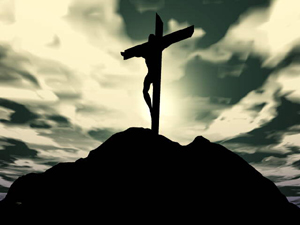
Golgotha is just outside the walls of the old city of Jerusalem in Israel. It is named in the New Testament as the place where Jesus was crucified. Jesus was brought before the Roman governor of the province, Pontius Pilate, and accused of blasphemy.
Pilate could find nothing to support the charge and offered to release Jesus. But the chief priests and elders persuaded the people to demand his death. Jesus was beaten by the Roman soldiers, dressed in a scarlet cloak and crowned with thorns to mock him as "King of the Jews". Afterwards he was forced to carry his own cross through the streets of Jerusalem to Golgotha.
The name Golgotha, meaning the place of a skull, is derived from the Aramaic language spoken in that part of Palestine. The word Calvary comes from "calvaria" which is the Latin translation of Golgotha. No one knows why Golgotha was so called but a very ancient story says that Adam's skull was buried there.
Monday, January 11, 2010
Why did the American Civil War Start?
The American Civil War (1861-1865) arose chiefly over the question of Negro slavery. In the 15th Century the Portuguese found a ready market for Negro slaves, which they captured during their expeditions along the African coasts.
As the American continent developed, these slaves were eagerly sought to labor on the cotton and tobacco plantations, in mines, or in general farm work. Between 1680 and 1786 more than 2,000,000 slaves were transported and it was not until 1833 that the United Kingdom Parliament passed an Act that set free all slaves in its territories.
In the United States the struggle between the slave-owning southern states and those of the North, where there was no slavery, was long and bitter. As the frontier moved westward, new states were seeking admission to the Union. Some had slaves and some did not.
In the north a growing party demanded immediate abolition of slavery, while in the south were some who threatened to leave the Union rather than give up their slaves. In 1860, Abraham Lincoln (1809-1865) who favored the gradual abolition of slavery, was elected President of the United States. Next year, seven southern states left the Union and formed the Confederate States, with Jefferson Davis as President. On April 12, the officer in charge of Port Sumter, at Charleston, West Virginia, refused to surrender it to Confederate soldiers, who opened fire and thus began the Civil War.
Although the North had greater numbers, the South had better generals and the war dragged on for four years, with no fewer than 2,260 battles and skirmishes. In 1863, there were great victories for the North at Gettysburg and Vicksburg. It was at Gettysburg that Lincoln delivered his famous address promising freedom for all.
General Lee, commander of the Confederate armies, surrendered on April 9 at Appomatox Court House, Virginia.
As the American continent developed, these slaves were eagerly sought to labor on the cotton and tobacco plantations, in mines, or in general farm work. Between 1680 and 1786 more than 2,000,000 slaves were transported and it was not until 1833 that the United Kingdom Parliament passed an Act that set free all slaves in its territories.
In the United States the struggle between the slave-owning southern states and those of the North, where there was no slavery, was long and bitter. As the frontier moved westward, new states were seeking admission to the Union. Some had slaves and some did not.
In the north a growing party demanded immediate abolition of slavery, while in the south were some who threatened to leave the Union rather than give up their slaves. In 1860, Abraham Lincoln (1809-1865) who favored the gradual abolition of slavery, was elected President of the United States. Next year, seven southern states left the Union and formed the Confederate States, with Jefferson Davis as President. On April 12, the officer in charge of Port Sumter, at Charleston, West Virginia, refused to surrender it to Confederate soldiers, who opened fire and thus began the Civil War.
Although the North had greater numbers, the South had better generals and the war dragged on for four years, with no fewer than 2,260 battles and skirmishes. In 1863, there were great victories for the North at Gettysburg and Vicksburg. It was at Gettysburg that Lincoln delivered his famous address promising freedom for all.
General Lee, commander of the Confederate armies, surrendered on April 9 at Appomatox Court House, Virginia.
Sunday, January 10, 2010
When was the Battle of Britain
The Battle of Britain in the Second World War began with skirmishes in June and July 1940, reached a climax in August and September and ended in the ferocity of the Blitz during the following winter. It laid the foundations for the survival of Britain and the eventual destruction of Nazi Germany.
Soon after the fall of France in the middle of June, the Germans began to prepare for a possible invasion of Britain by setting out first to destroy the Royal Air Force. There was a long series of air battles and bombardments.
The Germans seemed to have no systematic plan of action. On the other hand, Britain had developed a radar early warning system and a superb fighting aircraft, the Spitfire. Thus, although outnumbered, the British were able to defend with superior equipment and undivided aim against an enemy whose fleets of bombers, the Dornier 17, the Heinkel III and the Junkers 88, proved vulnerable to attacks by Spitfires and hurricanes. The best German fighter, the Messerschmitt 109, was on a par with the Spitfire but, over England, was at the limit of its range.
After waves of attacks had failed to put the R.A.F. out of action, the Germans switched their offensive from Fighter Command airfields and installations to London and other cities, causing terrible damage. But the raiders also suffered heavy casualties. On September 15 the British destroyed 185 enemy aircraft, demonstrating to the Luftwaffe, the German airforce, that it had lost the battle. Attacks on cities with explosive and fire bombs continued but lost their impetus by the end of April 1941.
Soon after the fall of France in the middle of June, the Germans began to prepare for a possible invasion of Britain by setting out first to destroy the Royal Air Force. There was a long series of air battles and bombardments.
The Germans seemed to have no systematic plan of action. On the other hand, Britain had developed a radar early warning system and a superb fighting aircraft, the Spitfire. Thus, although outnumbered, the British were able to defend with superior equipment and undivided aim against an enemy whose fleets of bombers, the Dornier 17, the Heinkel III and the Junkers 88, proved vulnerable to attacks by Spitfires and hurricanes. The best German fighter, the Messerschmitt 109, was on a par with the Spitfire but, over England, was at the limit of its range.
After waves of attacks had failed to put the R.A.F. out of action, the Germans switched their offensive from Fighter Command airfields and installations to London and other cities, causing terrible damage. But the raiders also suffered heavy casualties. On September 15 the British destroyed 185 enemy aircraft, demonstrating to the Luftwaffe, the German airforce, that it had lost the battle. Attacks on cities with explosive and fire bombs continued but lost their impetus by the end of April 1941.
Wednesday, September 16, 2009
When was the Jewish Diaspora?
Diaspora is the name given to Jewish communities who over thousand of years established themselves in different parts of the world. It is a Greek word meaning scattering.
The history of Diaspora goes back to the 8th Century B.C. when the people of Judah in northern Palestine were taken to captivity in Babylon on the River Euphrates in modern Iraq. When the exile ended after about 200 years, a great number of their descendants remained behind and formed a community, or diaspora, which continued to be important until the middle of the 11th Century.
The next great diaspora period occurred after the death of Alexander the Great in 323 B.C. when attempts by his successors to impose Greek authority on Jewish customs in Palestine led to thousands of Jews choosing exile. This period saw the formation of the great diaspora in Alexandria, Egypt. Here in the first century B.C. more than 40% of the population were Jews who had learned to combine Greek ideas with their own to produce a flourishing culture.
But the biggest dispersal from Palestine took place under the Roman Empire, especially after A.D. 70 when the army of Titus, later Roman emperor, crushed a nationalist revolt and destroyed the temple in Jerusalem. Although financial help from exiled patriots continued, Palestine gradually ceased to be a Jewish state. In the following centuries, the "scattering" spread throughout the world.
In 1939 the estimated number of Jews in the world was 16 million of whom about 475,000 were in Palestine. Horror and pity aroused by the systematic destruction of Jews by Nazi Germany led indirectly to the creation of the State of Israel in 1948.
Saturday, August 29, 2009
Where did David Kill Goliath?
The famous fight in which the boy David slew the giant Goliath took place about 15 miles south-west of Jerusalem, in the Valley of Elah in Israel. David was the youngest of eight brothers and looked after his father's sheep at Bethlehem while the Israelites under King Saul were at war with the Philistines. The First Book of Samuel in the Bible tells how David was sent by his father to take food to the Israelites' camp.
Goliath had challenged the Israelites to send a man to do battle with him, the result to decide which array should have the fruits of victory. No Israelite had dared to take up the challenge. But David persuaded Saul to let him fight Goliath, saying the giant was no more dangerous an adversary than the lion and bear he had slain while protecting his father's sheep.
The two contestants rushed to meet each other, the giant in full armour with sword, spear and shield, the boy with only a sling and five smooth stones from the river. David took a stone in his sling and aimed at Goliath. The giant was hit on the forehead and stunned. David then killed him with his own sword. The Philistines fled, pursued by the victorious Israelites.
Monday, August 3, 2009
What Happened to the Aborigines?
The original inhabitants of Australia, the Aborigines, met the usual fate of widely-scattered native peoples when the white settlers began to arrive and multiply. Their numbers fell drastically. This was not due to any policy of cruelty or repression. From the start intentions towards them were good. But the vision of the white administrators was not equal to bridging the gulf between the intensely religious and ceremonial native culture and the materialistic aims of the settlers.
By a natural process, perhaps the result of apathy or despair, the number of Aborigines fell from 350,000 in the 18th century to some 40,000 in the 1930's. But since then with more sympathy and understanding, their numbers have started to rise again. The main effort is now being directed to stop them becoming a permanently underpriviledged minority and to develop their undoubted gifts.
Monday, July 13, 2009
What is Bayeux Tapestry?
The Bayeux Tapestry, an ancestor of the strip cartoon, is an embroidery showing on a continuous linen band over 230 feet long, details of the invasion of England by William the Conqueror in 1066. Its manufacture was probably ordered by William's half brother, Odo, Bishop of Bayeux, who is pictured on it. The tapestry's existence is first recorded in 1476. It was produced once a year as a decoration in Bayeux Cathedral. The first reproduction dates from 1730.
There is general agreement that the tapestry, in worsted wool of eight colors was made soon after the Conquest. Its description of events tallies well with what is known of the Battle of Hastings. The tapestry is also noted for its decorative borders, which include figures from Aesop's fables and farming and hunting scenes.
There is general agreement that the tapestry, in worsted wool of eight colors was made soon after the Conquest. Its description of events tallies well with what is known of the Battle of Hastings. The tapestry is also noted for its decorative borders, which include figures from Aesop's fables and farming and hunting scenes.
Tuesday, January 6, 2009
What is Hara-Kiri?
Ceremonial suicide, or harakiri was undertaken by members of the samurai (warrior) class in old Japan. Voluntary hara-kiri dated back to the 12th century, and was committed to wipe out the dishonor of defeat in battle, as a protest at the behavior of a superior and for similar reasons.
The word harakiri means "belly-cutting". If carried out according to the rules, it was a slow and extremely painful means of suicide, meant to demonstrate the military virtues of great courage and extreme self-control.
Another version of hara-kiri was observed when a samurai was sentenced to be beheaded for a crime. To escape the shame of the common executioner, he was allowed to stab himself with a short sword. Immediately afterwards the sentenced samurai would be decapitated by a friend or relative waiting behind him.
A case of hara-kiri occured on November 26, 1970 after the well-known Japanese author, Yukio Mishima, failed to incite a regiment of Japanese soldiers to join his "Association of Shields" and stage a coup d'etat.
When the soldiers ignored his appeal, Mishima entered a room at their military headquarters, together with four supporters, and in front of the commanding general, who had been tied to a chair, Mishima slit his own stomach in the Samurai hara-kiri fashion. He was then decapitated by his "Chief of Staff", Hissho Morita, in the traditional way. Morita himself then committed harakiri and was subsequently decapitated in turn by another of Mishima's supporters.
The word harakiri means "belly-cutting". If carried out according to the rules, it was a slow and extremely painful means of suicide, meant to demonstrate the military virtues of great courage and extreme self-control.
Another version of hara-kiri was observed when a samurai was sentenced to be beheaded for a crime. To escape the shame of the common executioner, he was allowed to stab himself with a short sword. Immediately afterwards the sentenced samurai would be decapitated by a friend or relative waiting behind him.
A case of hara-kiri occured on November 26, 1970 after the well-known Japanese author, Yukio Mishima, failed to incite a regiment of Japanese soldiers to join his "Association of Shields" and stage a coup d'etat.
When the soldiers ignored his appeal, Mishima entered a room at their military headquarters, together with four supporters, and in front of the commanding general, who had been tied to a chair, Mishima slit his own stomach in the Samurai hara-kiri fashion. He was then decapitated by his "Chief of Staff", Hissho Morita, in the traditional way. Morita himself then committed harakiri and was subsequently decapitated in turn by another of Mishima's supporters.
Saturday, December 27, 2008
When did the Incas live?
The Incas, a race of South American Indians, are believed to have started their rise to power in Peru about five hundred years before the arrival of the Spanish conquerors in the 16th century. Thy are said to have climbed into the Andes mountains from the Eastern forests calling themselves "children of the sun".
According to their favorite legend, Manco Capac, the founder of the race, came out of Lake Titicaca in Peru with his sister who was also his wife. The sun god was said to have given him a staff and told him to build a city at a spot where it sank into the ground - in other words, where the ground was fertile. This city was given the name Cuzco, meaning navel, because the Incas regarded it as the center of the earth.
It was not long before the Incas began to conquer or absorb the neighboring tribes. By 1460 their empire extended from the Amazon forests to the Pacific Ocean, from the borders of what is now Ecuador, deep into Chile. This 2,000-mile territory was governed by a mild form of despotism. The term Inca properly applied only to the upper caste of the nobility and those of royal blood.
Property was held in common, money was not used and the products of labour were divided in three equal portions among the church, the governing classes and the people. Inca skills included spinning of woolen clothes, mining, engineering with tin and copper tools, the fashioning of gold and silver ornaments, irrigation and the use of fertilizers. They used a system of writing by means of knots tied in lengths of string.
The doom of this thriving and industrious civilization was sealed when the Spanish adventurer Francisco Pizarro sailed from the Isthmus of Panama with fewer than 200 men in 1531 to conquer and loot the country. Pizarro seized the Inca ruler Atahualpa and had him put to death after accepting a vast gold and silver ransom for his life. With their leader executed and their chiefs slain, the people were forced into submission. Slaughter, plunder and oppression followed. But today the remains of massive stone temples and palaces survive as reminders of the high state of Inca culture. Some masks and other ornaments survived.
According to their favorite legend, Manco Capac, the founder of the race, came out of Lake Titicaca in Peru with his sister who was also his wife. The sun god was said to have given him a staff and told him to build a city at a spot where it sank into the ground - in other words, where the ground was fertile. This city was given the name Cuzco, meaning navel, because the Incas regarded it as the center of the earth.
It was not long before the Incas began to conquer or absorb the neighboring tribes. By 1460 their empire extended from the Amazon forests to the Pacific Ocean, from the borders of what is now Ecuador, deep into Chile. This 2,000-mile territory was governed by a mild form of despotism. The term Inca properly applied only to the upper caste of the nobility and those of royal blood.
Property was held in common, money was not used and the products of labour were divided in three equal portions among the church, the governing classes and the people. Inca skills included spinning of woolen clothes, mining, engineering with tin and copper tools, the fashioning of gold and silver ornaments, irrigation and the use of fertilizers. They used a system of writing by means of knots tied in lengths of string.
The doom of this thriving and industrious civilization was sealed when the Spanish adventurer Francisco Pizarro sailed from the Isthmus of Panama with fewer than 200 men in 1531 to conquer and loot the country. Pizarro seized the Inca ruler Atahualpa and had him put to death after accepting a vast gold and silver ransom for his life. With their leader executed and their chiefs slain, the people were forced into submission. Slaughter, plunder and oppression followed. But today the remains of massive stone temples and palaces survive as reminders of the high state of Inca culture. Some masks and other ornaments survived.
Friday, December 26, 2008
Where did the Light Brigade Charge?
The famous Light Brigade took place eight miles south of the great port of Sebastopol on the west coast of the Crimean Peninsula, near the small harbour of Balaclava. During the Crimean War (1854-56), when the forces of France, Britain and Turkey fought the Russian Army, Balaclava was the Allied Base. It was defended by lines of earthworks on the hills around the harbour.
On October 25, 1854, Russian forces attempted to break these lines. Over-running some Turks on the heights and seizing their guns, the Russians then descended to the plains and attacked the British forces. The British Heavy Brigade drove them back over a low ridge of hills crossing the plain.
Then occured one of the most famous feats in the chronicles of the British Army, the Charge of the Light Brigade. Led by Lord Cardigan, 673 horsemen rode up a valley under heavy Russian fire. They charged a mile and a half up the valley to capture some Russian guns. They achieved their objective, but only 195 men returned. Among them was Lord Cardigan, who behaved as if the charge had been of no special significance.
Boarding his yacht, where he was living during the campaign, he bathed, he dined and went to bed. This most gallant action would have never taken place if a mistake had not been made in the giving of orders by the High Command. The 673 men of the Light Brigade had charged straight a the wrong guns!
Alfred, Lord Tennyson, a famous Victorian poet, immortalized the charge of the Brigade in the poem he wrote to celebrate it.
On October 25, 1854, Russian forces attempted to break these lines. Over-running some Turks on the heights and seizing their guns, the Russians then descended to the plains and attacked the British forces. The British Heavy Brigade drove them back over a low ridge of hills crossing the plain.
Then occured one of the most famous feats in the chronicles of the British Army, the Charge of the Light Brigade. Led by Lord Cardigan, 673 horsemen rode up a valley under heavy Russian fire. They charged a mile and a half up the valley to capture some Russian guns. They achieved their objective, but only 195 men returned. Among them was Lord Cardigan, who behaved as if the charge had been of no special significance.
Boarding his yacht, where he was living during the campaign, he bathed, he dined and went to bed. This most gallant action would have never taken place if a mistake had not been made in the giving of orders by the High Command. The 673 men of the Light Brigade had charged straight a the wrong guns!
Alfred, Lord Tennyson, a famous Victorian poet, immortalized the charge of the Brigade in the poem he wrote to celebrate it.
Monday, December 8, 2008
Why is Texas called "the Lone Star State"?
Texas is called the Lone Star State because for almost ten years, from 1836 until its annexation by the United States in 1845, the country was independent.
For three centuries up to 1821, Texas and Mexico had belonged to Spain. In all that time, Spain had shown hardly any interest in this vast territory which is equal in size to the total area of France, Belgium, the Netherlands and Denmark combined. When Mexico gained her independence, Texas was peopled by no more than 7000 and with only three settlements large enough to be called towns. Beset with their own problems of administration and revolts, Mexico allowed American families to colonize land in Texas.
By 1835 there were around 30,000 Americans settled in Texas, outnumbering the Mexicans by four to one. Too late for her own interests, Mexico tried to discipline the American Texans by abolishing slavery, levying duties and establishing military garrisons. Fighting broke out when martial law was declared by the Mexicans who tried to disarm the Texans. On October 2, 1835, the Texans won the first battle of the Texas Revolution at Gonzales. San Antonio was captured in December and the Mexicans withdrew to Mexico.
The Texans were weakened by arguments and lack of unity which allowed the Mexicans to recapture San Antonio on March 2, 1836, but while the Mexicans closed in on the Alamo, Texas declared her independence. The new nation found this independence difficult to manage and was relieved to be annexed in 1845 by a rather unwilling United States of America.
For three centuries up to 1821, Texas and Mexico had belonged to Spain. In all that time, Spain had shown hardly any interest in this vast territory which is equal in size to the total area of France, Belgium, the Netherlands and Denmark combined. When Mexico gained her independence, Texas was peopled by no more than 7000 and with only three settlements large enough to be called towns. Beset with their own problems of administration and revolts, Mexico allowed American families to colonize land in Texas.
By 1835 there were around 30,000 Americans settled in Texas, outnumbering the Mexicans by four to one. Too late for her own interests, Mexico tried to discipline the American Texans by abolishing slavery, levying duties and establishing military garrisons. Fighting broke out when martial law was declared by the Mexicans who tried to disarm the Texans. On October 2, 1835, the Texans won the first battle of the Texas Revolution at Gonzales. San Antonio was captured in December and the Mexicans withdrew to Mexico.
The Texans were weakened by arguments and lack of unity which allowed the Mexicans to recapture San Antonio on March 2, 1836, but while the Mexicans closed in on the Alamo, Texas declared her independence. The new nation found this independence difficult to manage and was relieved to be annexed in 1845 by a rather unwilling United States of America.
Subscribe to:
Posts (Atom)