To make a bee-line is to follow the example of bees int taking the shortest route from one place to another. The expression comes from the belief that bees return to the hive by the shortest possible way after they have gathered their food. And the shortest distance between two points is, of course, a straight line.
But on their return home, the bees sometimes make lines which are far from straight. These are dancing movements in the air to inform other members of the colony about their source of supply. They indicate whether the food is pollen or nectar, the direction and distance from the hive and even the colors of the flowers.
This bee code was discovered by the German naturalist Professor K. von Frisch. He found, for example, that a circular dance says the food source is close to the hive and that a waggle dance indicates long distances.
Showing posts with label natural history. Show all posts
Showing posts with label natural history. Show all posts
Saturday, August 7, 2010

Saturday, June 5, 2010
When does a Lizard shed its Tail?
A lizard is capable of shedding its tail at any time. If a lizard is attacked it may sacrifice its tail in an attempt to surprise and confuse the enemy.
When a lizard's tail is caught by an assailant or a trap, it will simply snap off and enable the reptile to escape.
Although some lizards' tails can be four times as long as the rest of their bodies, the loss in only temporary. A new tail can be grown quickly from the old stump.
When a lizard's tail is caught by an assailant or a trap, it will simply snap off and enable the reptile to escape.
Although some lizards' tails can be four times as long as the rest of their bodies, the loss in only temporary. A new tail can be grown quickly from the old stump.
Tuesday, June 1, 2010
Why do Bats make a high-pitched sound as they Fly?
Bats use high-pitched sounds to find their way about. The are nocturnal animals. That is they move about by night. So they have developed their hearing to such an extent that they can find their way by a method known as echo-location.
The blind-flying abilities of bats were first studied by Lazzaro Spallanzani (1729-1799). He surgically removed the eyeballs from several bats to prove that they did not need to see to fly.
In the 20th Century, biologists, using electronic instruments, have carried out experiments with bats. They have discovered that bats find out where to go by emitting high-frequency sounds and receiving the echoes as they bounce off objects. Most of the sounds have too high a frequency to be heard by the human ear.
Bats commonly fly together in groups, but apparently they are not confused by the sounds and echoes produced by each other. When hunting in woods and in the rain they are able to discriminate between the faint echoes bouncing off the ground, tree trunks, branches, twigs and raindrops.
These tiny flying mammals have been using the equivalent of our modern sonar device for millions of years.
The blind-flying abilities of bats were first studied by Lazzaro Spallanzani (1729-1799). He surgically removed the eyeballs from several bats to prove that they did not need to see to fly.
In the 20th Century, biologists, using electronic instruments, have carried out experiments with bats. They have discovered that bats find out where to go by emitting high-frequency sounds and receiving the echoes as they bounce off objects. Most of the sounds have too high a frequency to be heard by the human ear.
Bats commonly fly together in groups, but apparently they are not confused by the sounds and echoes produced by each other. When hunting in woods and in the rain they are able to discriminate between the faint echoes bouncing off the ground, tree trunks, branches, twigs and raindrops.
These tiny flying mammals have been using the equivalent of our modern sonar device for millions of years.
Friday, April 30, 2010
Where do Butterflies go when it Rains?
When it rains butterflies settle on the stems of flowers or stalks of grass. They hang head downwards with their wings folded together over their backs. Most butterflies are difficult to see when their wings are closed, because the undersides have only pale colors and faint patterns.
There about 10,000 known species of butterflies. The range in size from less than an inch to the swallow tails which lives in north Australia and the Pacific Islands and have a wing span of 10 inches. Most female butterflies have less colorful wings than the males of the same species. They lay between 100 and 3,000 eggs, according to the species, placing them on a plant which will provide suitable food for the caterpillars which develop from the eggs.
The caterpillar becomes a chrysalis from which, eventually the fully grown butterfly emerges. Adult life may last for only a few weeks, but some butterflies hibernate.
Butterflies feed on the nectar of plants and on sweet juices, particularly those of over-ripe or rotting fruit. This food provides them with the energy to fly but is not used for body building. All growth takes place at the caterpillar stage of a butterfly's life.
There about 10,000 known species of butterflies. The range in size from less than an inch to the swallow tails which lives in north Australia and the Pacific Islands and have a wing span of 10 inches. Most female butterflies have less colorful wings than the males of the same species. They lay between 100 and 3,000 eggs, according to the species, placing them on a plant which will provide suitable food for the caterpillars which develop from the eggs.
The caterpillar becomes a chrysalis from which, eventually the fully grown butterfly emerges. Adult life may last for only a few weeks, but some butterflies hibernate.
Butterflies feed on the nectar of plants and on sweet juices, particularly those of over-ripe or rotting fruit. This food provides them with the energy to fly but is not used for body building. All growth takes place at the caterpillar stage of a butterfly's life.
Thursday, March 11, 2010
Why are Japanese Trees Small?

Many Japanese trees are small because they are dwarfed by the Japanese art of bonsai. This art consists in training and growing dwarf trees as symbols of the Japanese ideal of the immersion of the self in nature. This ideal also finds expression in their poetry, the tea ceremony and flower arranging.
The tiny trees express quietness, beauty of shape and line, and the changes brought about by the seasons. They must look old, with a sturdy yet shapely trunk which has bark of an interesting color and texture, and well-exposed roots. There must also be a proper feeling of scale. This means short needles on conifers, tiny leaves on deciduous trees and small flowers or fruit. Lastly, there must be open space between branches and between masses of foliage.
The word bonsai means tray-planted. The art goes back more than 1000 years. It originated in China and spread to Japan in the 12th Century. During the 19th Century many Westerners came to admire bonsai. But it was not until the end of the Second World War that it became really popular in the western world. Bonsai societies were established in many countries, and many Japanese families now maintain a flourishing overseas trade.
Wednesday, February 24, 2010
Why are Birds' Eggs so shaped

The roundness of an egg allows pressure to be applied from the outside which would break it if applied from the inside. Thus a helpless chick is protected until the moment it needs to break out from its shell. It can then do this with the gentlest of tapping.
Eggs are hatched by an adult birth sitting on them, and the best container for round objects is a cup-shaped nest which prevents them rolling about. So the best shape for eggs is for one end to be smaller than the other. The normal position for eggs in a nest is to have the smaller ends pointing inwards. This means the eggs take up the minimum of room and make it easier for the sitting bird to cover them.
Birds with scanty nests, as in the case of most sea birds, have more elongated eggs. If such eggs are caught by the wind while lying on some cliff-face or rocky ledge, they will spin round instead of rolling over the edge.
Monday, August 31, 2009
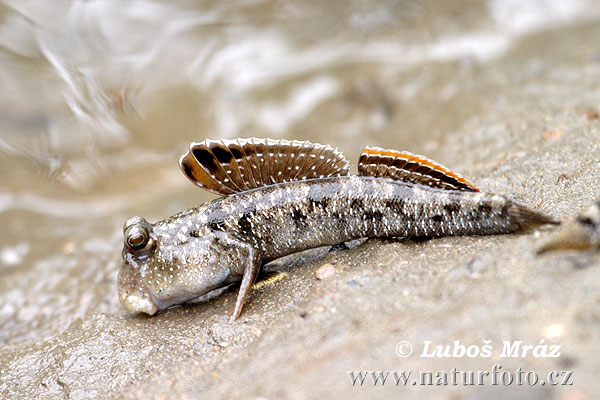
What is a Mudskipper?
Monday, August 24, 2009
Why Don't Trees Grow On Mountain Tops?
Trees do not grow on mountain tops either because the situation is too exposed, or because the soil is too thin or too frozen to allow their roots to draw nourishment from the ground.
In most mountainous areas, there is usually a clearly marked timberline, a boundary above which there is no tree growth. Sometimes the height of the timberline is dictated by local climatic or soil conditions, but as general rule the boundary gets lower as the distance from the Equator increases. In the far north and south the cold is so intense that it is quite impossible for any trees to grow and the timberline is therefore at sea level.
A range of mountains on or near the equator, like the Ruwenzori range in Africa, can be divided into different belts of vegetation according to the types of trees growing at its base and at various heights up its slopes.
Similarly the belts of vegetation change according to the distance from the Equator. The first belt is the tropical or rain-forest region where it is hot and trees grow rapidly. Next comes a hot dry belt where few trees grow because there is little rain. This is followed by the deciduous or warm and temperate belt, and by the coniferous belt, with very cold winters but fairly warm summers. Then comes the timberline, beyond which trees cannot grow, and finally the regions of permanent ice and snow, where no vegetation at all can live.
Friday, August 14, 2009
When Does a Cow Start To Give Milk?
A cow starts to give milk between the ages of two and two-and-a-half years after the birth of its first calf. For the first few days the milk is unfit for human consumption and is fed to the calf which is afterwards reared separately. During the milking or lactation period that follows the cow's yield usually reaches a maximum after four to six weeks and continues in decreasing quantities for nine to ten months.
To ensure a steady supply of milk, farmers arrange for their cows to calve every 12 months. Attention to breeding has led to steady improvements in yields. A good cow may produce up to 2,000 gallons during the lactation period.
Cows are normally milked twice a day, morning and evening. Except for the smallest herds, milking in advanced countries is usually done by machines which suck the milk from the cows' udders and transfer it to covered containers. But there are still many countries where milking is largely done by hand, in the traditional way.
Tuesday, June 30, 2009
What is Reindeer Moss?
Reindeer moss is a species of lichen so called because it is the staple winter food of reindeer (and caribou) in Arctic and sub-Arctic regions. The animals reach the plant by scraping away the snow with their feet. But plant growth in those cold northern lands is so slow that the lichen can take more than 30 years to recover after the reindeer have grazed. These domesticated herbs therefore have to travel long distances in search of food, and the Laplanders of Northern Scandinavia, who depend on the animals for their livelihood must travel with them.
Fortunately, reindeer moss is especially abundant in Lapland, although it also grows extensively in much of northern Europe, the tundra (or treeless plains) of Siberia and the barren expanses of Arctic America.
During the short summer the reindeer are able to feed on herbage and shoots then accessible in the valleys. These versatile animals provide the Laplanders with meat, milk, cheese and the raw materials for clothing, shoes, and tents. They are also a means of transport.
Reindeer moss is sometimes eaten by human beings, after being powdered and mixed with other food. But it leaves a slightly burning sensation on the human palate. This bluish-grey plant grows erect in tufts, and is remarkable for its many branches, which strangely resemble a deer's antlers.
Fortunately, reindeer moss is especially abundant in Lapland, although it also grows extensively in much of northern Europe, the tundra (or treeless plains) of Siberia and the barren expanses of Arctic America.
During the short summer the reindeer are able to feed on herbage and shoots then accessible in the valleys. These versatile animals provide the Laplanders with meat, milk, cheese and the raw materials for clothing, shoes, and tents. They are also a means of transport.
Reindeer moss is sometimes eaten by human beings, after being powdered and mixed with other food. But it leaves a slightly burning sensation on the human palate. This bluish-grey plant grows erect in tufts, and is remarkable for its many branches, which strangely resemble a deer's antlers.
Saturday, January 3, 2009
Where does a Bee Keep its Sting?
A bee keeps its sting at the end of its abdomen. At the tip of a bee's abdomen is a shaft where its stinging thorn is to be found. It can sting several times, but once it leaves the thorn in its victim's flesh it will not be able to sting again.
It is not true to say that a bee will automatically die once it loses its thorn. Only female bees can sting. Male bees, or drones, lack this means of protecting themselves.
There is a species of which even the female cannot sting. But these bees which live mainly in Africa and South America are not defenseless. If disturbed, they will fly at the intruder in great numbers, crawl into his eyes, ears and hair and smear him with a sticky substance, causing him to retreat in great discomfort.
It is not true to say that a bee will automatically die once it loses its thorn. Only female bees can sting. Male bees, or drones, lack this means of protecting themselves.
There is a species of which even the female cannot sting. But these bees which live mainly in Africa and South America are not defenseless. If disturbed, they will fly at the intruder in great numbers, crawl into his eyes, ears and hair and smear him with a sticky substance, causing him to retreat in great discomfort.
Friday, January 2, 2009
Where would you find the World's Largest Animal?
Blue whales are the largest living animals. They are cosmopolitan creatures and are found in most of the seas, from the polar caps to the equator. Normally those which inhabit the colder seas will migrate to warmer waters in winter.
Their dimensions are almost beyond belief. Although figures can never be quite accurate, a blue whale can weigh more than 200 tons and many have been found measuring over 100 feet in length. The tongue alone, of a female whale found in Antarctica, weighed well over four tons.
It has been estimated that in the 1930s there were nearly 40,000 blue whales in the world. But by the end of the 1960s there were fewer than 1,000 alive. This was because they became popular victims for the misdirected efforts of over-zealous hunters.
Their dimensions are almost beyond belief. Although figures can never be quite accurate, a blue whale can weigh more than 200 tons and many have been found measuring over 100 feet in length. The tongue alone, of a female whale found in Antarctica, weighed well over four tons.
It has been estimated that in the 1930s there were nearly 40,000 blue whales in the world. But by the end of the 1960s there were fewer than 1,000 alive. This was because they became popular victims for the misdirected efforts of over-zealous hunters.
Thursday, January 1, 2009
Where did all the Dodos go?
The Dodo was rather a stupid bird. Indeed, it was so stupid that it was named Dodo by the Portuguese when they discovered Mauritius - its home - in 1507. The Portuguese word doudo means stupid.
Mauritius is an island, 720 square miles in area and lying 500 miles to the east of Madagascar in the Indian Ocean. Until the arrival of man, with his attendant creatures such as the cat and dog, the dodo had been able to live in peace. It had no enemies, which was fortunate because it was big and clumsy and was completely unsuited to fleeing from danger. Its short legs were almost incapable of supporting the weight of the fat, round body (about the size of a swan's) and the ridiculously inadequate, stubby wings were of no use for flying.
Within 180 years of its discovery by the Portuguese, the dodo was extinct. Over the intervening years, several were brought to Europe alive, and one was to be seen in London in 1638. By 1680 the dodo had succumbed.
With the help of drawings and by the collection of bones gathered in Mauritius, an almost complete reconstruction has been made of the poor bird. It can be seen at the Natural History in London.
Mauritius is the only place in the world where the bird is known to have existed. A similar bird once lived on the neighboring island of Rodriguez, but this also has been extinct.
The phrase, "as dead as the dodo" is used to mean that something is very dead indeed.
Mauritius is an island, 720 square miles in area and lying 500 miles to the east of Madagascar in the Indian Ocean. Until the arrival of man, with his attendant creatures such as the cat and dog, the dodo had been able to live in peace. It had no enemies, which was fortunate because it was big and clumsy and was completely unsuited to fleeing from danger. Its short legs were almost incapable of supporting the weight of the fat, round body (about the size of a swan's) and the ridiculously inadequate, stubby wings were of no use for flying.
Within 180 years of its discovery by the Portuguese, the dodo was extinct. Over the intervening years, several were brought to Europe alive, and one was to be seen in London in 1638. By 1680 the dodo had succumbed.
With the help of drawings and by the collection of bones gathered in Mauritius, an almost complete reconstruction has been made of the poor bird. It can be seen at the Natural History in London.
Mauritius is the only place in the world where the bird is known to have existed. A similar bird once lived on the neighboring island of Rodriguez, but this also has been extinct.
The phrase, "as dead as the dodo" is used to mean that something is very dead indeed.
Wednesday, December 31, 2008
When Does a Chameleon change Color?
A chameleon will change color when it senses danger. This remarkable member of the lizard family can change color to match its background, or at least, to become almost unrecognizable.
The ranges of colors and patterns of the various species differ widely, but most chameleons can become yellow or cream, green, or dark brown. They can also adapt spots either dark or light depending on the color of the ground.
Apart from its response to danger, the chameleon will change color according to the light and temperature. This mechanism is controlled from the nervous system and involves the dispersion or concentration of color pigments in the creature's skin.
The ranges of colors and patterns of the various species differ widely, but most chameleons can become yellow or cream, green, or dark brown. They can also adapt spots either dark or light depending on the color of the ground.
Apart from its response to danger, the chameleon will change color according to the light and temperature. This mechanism is controlled from the nervous system and involves the dispersion or concentration of color pigments in the creature's skin.
Tuesday, December 30, 2008
When do Birds Migrate?
Millions of birds of many different varieties migrate at the end of summer. With unfailing regularity they leave the regions where they were born to fly to warmer climates for the winter. The following spring they return to their breeding grounds.
Each year these migratory birds travel as much as 20,000 miles, finding their way back on time with extraordinary precision. Some travel as individuals.
Migration is triggered off by the length of daylight, which apparently affect the birds' nervous system. When the days get shorter the birds receive the signal to leave for their warmer winter grounds, and when the daylight increases to a certain level, they receive another signal to return home.
Each year these migratory birds travel as much as 20,000 miles, finding their way back on time with extraordinary precision. Some travel as individuals.
Migration is triggered off by the length of daylight, which apparently affect the birds' nervous system. When the days get shorter the birds receive the signal to leave for their warmer winter grounds, and when the daylight increases to a certain level, they receive another signal to return home.
Monday, December 29, 2008
When does the male stickleback turn red?
The male stickleback's belly turns red at the start of the breeding season in spring. Normally the belly of this small fish is silver-colored, the rest of it varying from brown to green. But when the time comes for him to mate he becomes very active in attracting females with his bright new color.
In building the home and rearing the family the male stickleback performs many of the functions usually associated with a female fish. He chooses the place for the nest, collects the stems of various aquatic plants and binds them together using a threadlike web secreted from his kidney.
Once the female has been enticed into his nest, she will lay her eggs and depart, leaving him on guard. He watches over the eggs with great care and even looks after the baby fish.
In building the home and rearing the family the male stickleback performs many of the functions usually associated with a female fish. He chooses the place for the nest, collects the stems of various aquatic plants and binds them together using a threadlike web secreted from his kidney.
Once the female has been enticed into his nest, she will lay her eggs and depart, leaving him on guard. He watches over the eggs with great care and even looks after the baby fish.
Sunday, December 7, 2008
Where Does a Leech Feed?
Leeches, which are rather slimy worms and vary in length from an inch to several inches, have two suckers, a big one a the rear and a smaller one at the mouth end. They have powerful muscles which enable them to expand and contract their bodies.
This makes them excellent swimmers. They can also use their suckers to crawl on the land. In tropical Asia, the islands of the Pacific and the Indian Ocean, there is a particularly vicious and dreaded species of land leech which enters the breathing passages of animals, gorges on the animal's blood and swells so that it cannot escape.
Aquatic or water leeches cling to fishes, turtles and shell fish. Some leeches feed on earthworms and frogs' eggs. Others live on the larvae of insects and even on the microscopic life on the floor of the pond.
Leeches have been used in medicine from early times until quite recently to draw blood from a patient. They also serve as fish bait. In parts of the United States they are regarded as useful in controlling the snail population in lakes and ponds.
This makes them excellent swimmers. They can also use their suckers to crawl on the land. In tropical Asia, the islands of the Pacific and the Indian Ocean, there is a particularly vicious and dreaded species of land leech which enters the breathing passages of animals, gorges on the animal's blood and swells so that it cannot escape.
Aquatic or water leeches cling to fishes, turtles and shell fish. Some leeches feed on earthworms and frogs' eggs. Others live on the larvae of insects and even on the microscopic life on the floor of the pond.
Leeches have been used in medicine from early times until quite recently to draw blood from a patient. They also serve as fish bait. In parts of the United States they are regarded as useful in controlling the snail population in lakes and ponds.
Subscribe to:
Posts (Atom)